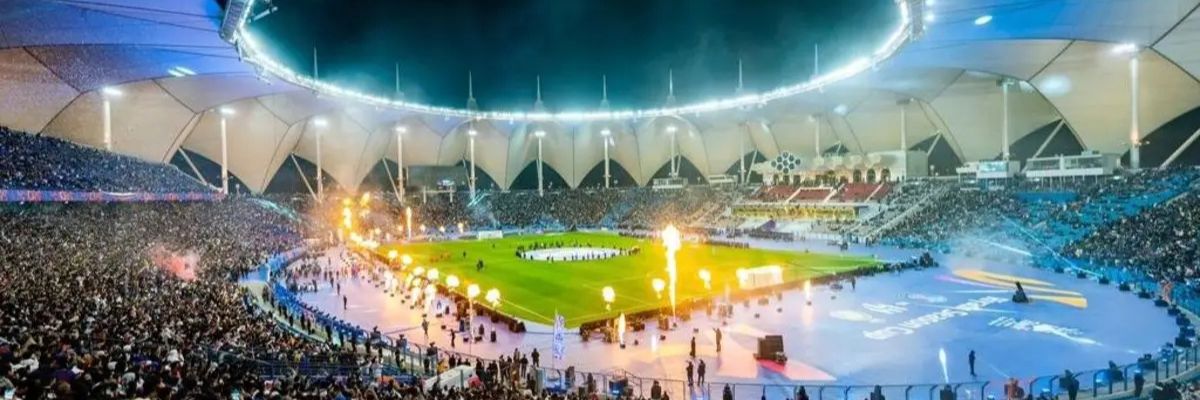
Saudi Arabia's major investment in sports and major events has created substantial legal work around contracts, licensing, and commercial structuring in this space, reflecting the Kingdom's deliberate strategy of using sport and entertainment as a genuine pillar of its broader Vision 2030 diversification.
This investment means the sector now spans everything from major recurring events drawing international audiences to newer esports and gaming ventures still establishing their commercial and legal footing.
This falls under our Sports & Esports Law service within Sector-Specific Law, covering player transfer agreements, team employment contracts, and the specific performance and conduct clauses that matter in a sports employment relationship beyond standard labor law considerations.
We help teams and organizations structure these agreements with genuine attention to the sector's specific practices, since a generic employment contract often fails to address the particular realities of a professional sports relationship.
Major events require licensing and coordination with multiple regulatory bodies depending on the event type, and we help event organizers navigate this process, from initial licensing through the operational compliance questions that arise once an event is actually underway.
This licensing landscape has developed rapidly alongside the growth of Saudi Arabia's events calendar, and we stay current on how these requirements are actually being applied in practice.
This connects to our Trademark Registration service within IP, and for events and sports organizations specifically, protecting event branding, team logos, and the commercial value tied to sponsorship arrangements deserves the same rigor as any other significant brand asset.
We help structure sponsorship agreements that clearly define what a sponsor's investment actually entitles them to, since ambiguity here is a common source of disputes once a sponsorship relationship is underway.
Esports occupies a genuinely newer regulatory space still actively developing its own framework, and questions around player contracts, tournament organization, and streaming rights don't always map cleanly onto traditional sports law precedent, requiring attorneys who track this specific area as it develops.
We help esports organizations and event operators navigate this evolving landscape with current understanding rather than assumptions carried over from traditional sports.
Major sports and entertainment events increasingly involve broadcasting and streaming rights arrangements that require careful structuring around territorial exclusivity, revenue sharing, and content usage rights, and we help organizations structure these agreements with genuine commercial sophistication.
Getting these rights arrangements right matters considerably as event revenue increasingly depends on broadcasting deals alongside traditional ticket sales and sponsorship.
Where a dispute arises — a contract disagreement with a player, a sponsorship dispute, or an event licensing complication — we handle these with genuine sector-specific understanding, coordinating with our Disputes & Litigation practice where formal proceedings become necessary.
This sector-specific knowledge matters since sports and events disputes often turn on industry-specific practices that a generalist approach might miss.
Get in touch via WhatsApp to discuss where things stand, whether that's a player contract, event licensing, or protecting sponsorship assets.
We can typically outline the relevant considerations within the same conversation.
Yes — this falls under our Sports & Esports Law service within Sector-Specific Law.
Yes — this connects to our Trademark Registration service within IP.
Often yes — esports occupies a genuinely newer regulatory space, and questions around contracts and streaming rights don't always map onto traditional sports law precedent.
Exactly what a sponsor's investment entitles them to — ambiguity here is a common source of disputes once a sponsorship relationship is underway.
Yes — we help structure these arrangements around territorial exclusivity, revenue sharing, and content usage with genuine commercial sophistication.
 Expert Riyadh